Guides
Anti-LGBTQ Hate Online: What Is a Crime and What Helps
Hass-Hetze editorial7 min read
As of · General information, not legal advice
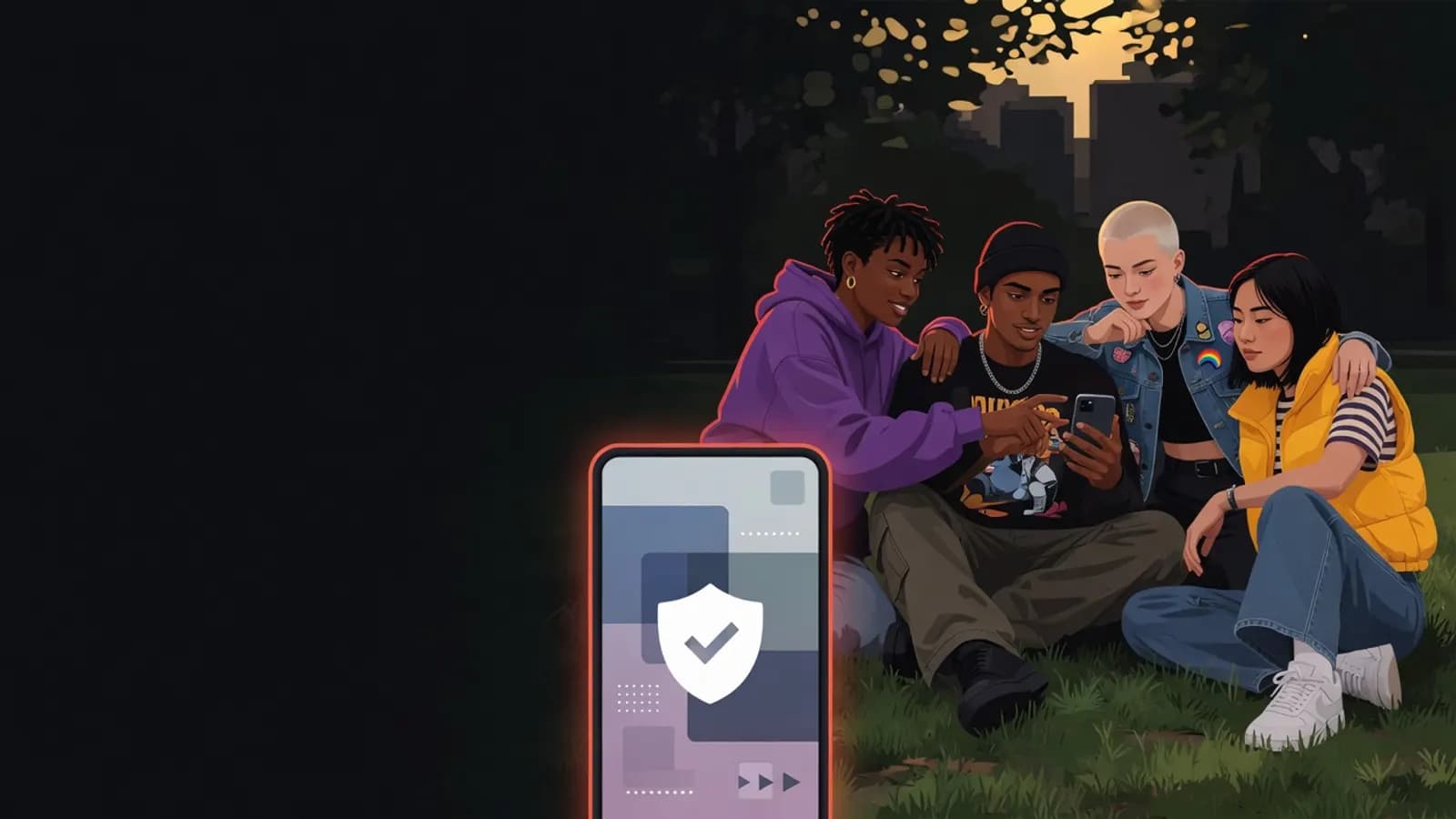
Anti-LGBTQ hate online: when it is a crime in Germany, what applies to outing and deadnaming, how to protect yourself and where to find support.
Anti-LGBTQ hate online affects many people: lesbian, gay, bi, trans, inter and non-binary people, and anyone assumed to be. It ranges from insults under a Pride photo to hate against whole groups, threats and forced outings. Not all of it is a criminal offence in Germany, but more of it is than many people think. This guide explains which provisions may apply, how you can protect yourself and where to find support.
If you are being threatened and fear for your safety, call 110. If you are feeling very low: the Telefonseelsorge crisis line is available around the clock on 0800 111 0 111, and Nummer gegen Kummer for children and young people on 116 111, Monday to Saturday from 2 pm to 8 pm. Both are mainly in German.
What does anti-LGBTQ hate online look like?
- Insults and slurs because of sexual orientation or gender identity
- Hate against queer people as a group, for example calling them “sick” or a “danger to children”
- Forced outing: someone makes your sexual orientation or gender identity public without your consent, for example at school or in your family
- Deadnaming and deliberate misgendering to humiliate a trans person
- Threats, often combined with published data such as where you live or go to school
- Coordinated attacks on accounts that post about queer topics
When is anti-LGBTQ hate a criminal offence?
Whether a specific post is a criminal offence depends on its wording and context. That is for the police or a law firm to assess. Where the line with freedom of expression runs is explained in Insult or Freedom of Expression?. These provisions of the German Criminal Code (StGB) may apply:
Insult (Beleidigung, Section 185 StGB). Degrading statements against you as a person. If committed publicly, the penalty is up to two years in prison or a fine. As a rule, a formal request for prosecution (Strafantrag) is needed.
Incitement-based insult (verhetzende Beleidigung, Section 192a StGB). This offence has existed since 2021, and it explicitly names sexual orientation. It is an offence to send you content that insults, maliciously disparages or defames a group because of its sexual orientation and is capable of attacking human dignity. The condition is that you belong to that group and did not ask for the content. This can cover, for example, hateful direct messages that are not public. Up to two years or a fine. Section 192a does not explicitly name gender identity.
Incitement to hatred (Volksverhetzung, Section 130 StGB). This provision protects national, racial, religious and ethnic groups as well as “sections of the population”. It does not explicitly name sexual orientation or gender identity. But queer people can be protected as a section of the population. In 2026, the Higher Regional Court (Oberlandesgericht) of Karlsruhe upheld a preacher's conviction for incitement to hatred. In a sermon streamed online, he had compared queer people to garbage and said they deserved death (decision of 1 June 2026). One requirement is that a statement is capable of disturbing public peace. The penalty ranges from three months to five years. There are political demands to name queer people explicitly in Section 130. So far, that is not the law. More in Incitement to Hatred Online: What Is a Criminal Offence.
Threats (Bedrohung, Section 241 StGB). Threats, for example of violence against you or people close to you, are a criminal offence. If made publicly, the penalty is higher.
Doxxing (Section 126a StGB). It is an offence to spread your address or other data in a way that can and is meant to expose you to the risk of a crime. What you can do then is explained in Doxxing: When Your Personal Data Is Published.
Sentencing (Section 46(2) StGB). For every offence, the court takes the offender's motives into account. The law explicitly names motives “directed against sexual orientation” and “gender-specific” motives. Such motives can lead to a higher sentence.
Forced outing and deadnaming
There is no specific criminal law against forced outing. But someone who outs you may violate your general right of personality (allgemeines Persönlichkeitsrecht). You can take civil action against this, for example with a claim for an injunction and removal. Depending on what was said, insult or defamation may also apply.
If you changed your gender entry and first names under the Self-Determination Act (Selbstbestimmungsgesetz, SBGG), your previous entry and previous first names may, in principle, not be disclosed without your consent (Section 13 SBGG). Anyone who discloses them to harm you commits an administrative offence. The fine can be up to 10,000 euros (Section 14 SBGG). Deliberate misgendering is hurtful. Whether it amounts to an insult in an individual case depends on the context.
How can you protect yourself from anti-LGBTQ hate?
- Control your visibility. Check what information is public: school, where you live, workplace, photos showing recognisable places. You decide who sees what.
- Filter comments. Many platforms offer word filters and let you restrict who can comment or message you. Use them, especially for Pride posts or when a post goes viral.
- Separate accounts. A private account for friends and a public one for activism or content can help.
- Don't argue. Arguing with hate accounts drains your energy and rarely changes anything. Secure, report, block.
- Bring in allies. Ask friends to report hate comments too and to back you up, without hating back.
Secure evidence as with any online hate: a screenshot with date, time, profile name and link, before you block.
Where can you find support?
- Queer counselling centres: many cities have counselling centres and youth groups for queer people. You can get support there even if you are not out yet.
- HateAid: support for people affected by digital violence at hateaid.org.
- JUUUPORT: young people advise teenagers online about problems on the internet, confidentially and free of charge, at juuuport.de.
- Nummer gegen Kummer: 116 111, Monday to Saturday from 2 pm to 8 pm, free and anonymous.
- Telefonseelsorge: 0800 111 0 111, around the clock.
- Police: some state police forces have dedicated contact persons for queer people. Ask your local police.
Hate against you says something about the people sending it, not about you. If the attacks stay with you, read Mental Health After Online Hate.
Frequently asked questions
Is it a crime to insult someone because of their sexuality?
An insult is an offence under Section 185 StGB, whatever the reason. An anti-queer motive can also affect the sentence (Section 46(2) StGB). Whether a specific statement is an insult depends on the context.
Is forced outing a crime?
There is no specific offence. But an outing can violate your right of personality, and a law firm can demand an injunction and removal. Depending on the content, insult or defamation may also apply.
Is deadnaming prohibited?
If you changed your gender entry and first names under the SBGG, a disclosure ban protects you (Section 13 SBGG). Anyone who discloses your previous name to harm you risks a fine of up to 10,000 euros (Section 14 SBGG).
Do I have to file a Strafantrag?
For insult, usually yes, within three months. Incitement to hatred and doxxing under Section 126a StGB are prosecuted ex officio; a report is enough.
How Hass-Hetze can help
You can report it through our form. Upload your screenshots and links there. If you say yes, your report goes automatically to a suitable cooperating law firm (Kooperationskanzlei) as soon as one is available. If there is no suitable firm right now, you get an email with other places to turn to straight away. Deadlines keep running: you can always file a request for prosecution (Strafantrag) with the police yourself. The legal assessment comes from the law firm, not from us.